
Hip
Hip Pain, Hip Arthritis and Hip Replacement in Toowoomba
Hip pain can interfere with walking, sleep, work, stairs, getting dressed and getting in or out of a car. Dr Dolapo Sotade is a specialist orthopaedic surgeon who assesses hip pain and hip arthritis at Summit Orthopaedics in Toowoomba. Patients are seen from Toowoomba, the Darling Downs and surrounding regional communities.
The first task is to identify where the pain is coming from. Groin pain and stiffness commonly arise from the hip joint, but pain around the buttock or outside of the hip may come from tendons, bursae, the lower back or another nearby structure. Treatment is based on the diagnosis, symptom severity, imaging, general health and the activities that matter to you.
A consultation does not commit you to surgery. Many hip conditions are managed without an operation. Hip replacement is considered only when the diagnosis, symptoms and expected benefits justify its risks.
When should hip pain be assessed?
-
Pain in the groin, buttock, thigh or knee that limits walking or daily activity
-
Hip stiffness affecting shoes, socks, stairs, chairs or car transfers
-
Night pain, rest pain or loss of sleep
-
Reduced walking distance, limping or increasing reliance on a walking aid
-
Reduced walking distance, limping or increasing reliance on a walking aid
-
X-rays reporting moderate or advanced hip arthritis
Conditions assessed
-
Hip osteoarthritis
Hip osteoarthritis is loss of cartilage from the ball-and-socket joint. It can cause groin pain, stiffness, reduced movement and difficulty weight-bearing. Symptoms and X-ray severity do not always match, so decisions are based on the overall clinical picture rather than imaging alone.
-
Outer hip pain
Pain over the outside of the hip may relate to gluteal tendon overload or greater trochanteric pain syndrome, sometimes called trochanteric bursitis. These problems are usually treated without surgery using load modification and targeted rehabilitation.
-
Pain referred from another area
Lower-back, pelvic and knee conditions can mimic hip pain. Examination of gait, hip movement, strength and related joints helps determine whether the hip joint is the main pain source.
How hip pain is assessed
Assessment includes the location and pattern of pain, walking tolerance, previous treatment, medical history and personal goals. Examination usually considers gait, hip range of motion, muscle function, leg length and the lower back and knee where relevant.
Standing or pelvic X-rays are commonly the first imaging test for suspected arthritis. MRI, CT or a diagnostic injection may be useful in selected cases, but they are not routinely required for every patient.
Non-surgical treatment for hip arthritis
Non-operative care may reduce symptoms and help maintain function. The appropriate combination differs between patients and may include:
-
Education and adjustment of aggravating activities
-
Physiotherapy or exercise therapy for strength, balance and mobility
-
Weight management where this is relevant and achievable
-
A walking stick or other aid to reduce load and improve confidence
-
Paracetamol, topical treatment or anti-inflammatory medication after checking medical suitability with the treating doctor
-
Image-guided injection in selected circumstances, recognising that benefit is variable and usually temporary
Procedures
-
Total hip replacement
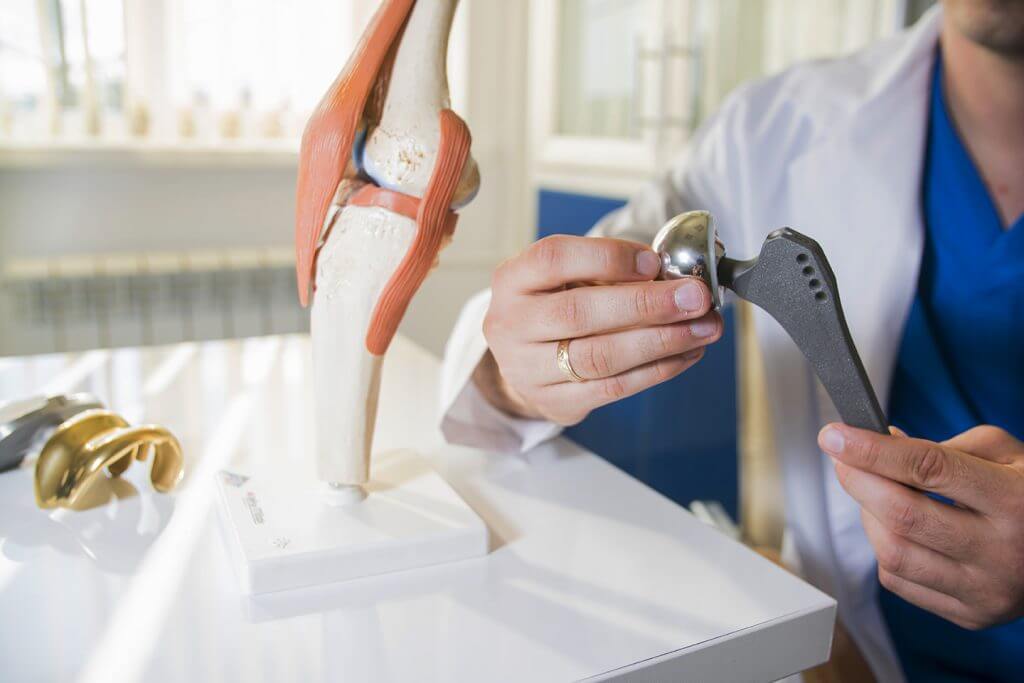
Total hip replacement removes the damaged femoral head and resurfaces the socket with prosthetic components. It may be considered when advanced arthritis causes persistent pain and loss of function despite reasonable non-surgical care. The aim is to reduce arthritis-related pain and improve function. It cannot restore a completely normal hip or guarantee a particular activity level. Implant choice, fixation and surgical approach are individualised according to anatomy, bone quality, health and stability requirements.
-
Robotic-assisted hip replacement
Where available and clinically appropriate, robotic or computer-assisted planning may be used to support component positioning and assessment of hip mechanics. The technology does not operate independently and does not replace the surgeon’s judgement. It also does not guarantee a better clinical outcome or remove the usual risks of hip replacement.
Risks and recovery
Important risks include infection, bleeding, blood clots, dislocation, fracture, nerve or blood-vessel injury, leg-length difference, persistent pain, stiffness, implant wear or loosening, and the possible need for further surgery. Personal risk is influenced by age, bone quality, weight, smoking, diabetes, medications and other medical conditions.
Many patients stand and walk with physiotherapy on the day of surgery or the following day. Recovery is gradual: walking and daily activities commonly improve over the first 6–12 weeks, while strength and confidence may continue to improve for 6–12 months. Time away from work and driving depends on the operated side, occupation, pain, mobility, medication and ability to control a vehicle safely.
What to expect at your appointment
-
1
Discussion of symptoms, health, previous treatment and goals
-
2
Examination of walking, hip movement and relevant nearby structures
-
3
Review of existing X-rays or other imaging
-
4
Discussion of suitable non-surgical options
-
5
Discussion of hip replacement only if it is a reasonable option, including alternatives, limitations, risks and recovery
Arrange a hip assessment
A GP or specialist referral is recommended. To arrange an appointment, contact Summit Orthopaedics or complete the new-patient registration form. Consultations are held at Suite 61, St Andrew’s Toowoomba Hospital, 280 North Street, Rockville QLD 4350.
FAQ
Not necessarily. Surgery is usually considered when pain and loss of function remain unacceptable despite appropriate non-surgical care and the likely benefit outweighs the individual risks.
Usually not for straightforward arthritis. Current pelvic or hip X-rays are often more useful initially. Further imaging is arranged when it may change diagnosis or treatment.
Groin pain and stiffness are more suggestive of the hip joint. Pain directly over the outer hip more often involves tendons or adjacent soft tissues. There is overlap, so examination is important.
Robotic assistance is a planning and positioning tool. It may improve the consistency of selected technical measurements, but it does not eliminate complications or guarantee a superior patient outcome.
Driving resumes only when you are no longer impaired by medication, can enter and exit the vehicle safely, and can perform an emergency stop reliably. Timing varies and must be individualised.